
The best of the agile community
July 2026
Issue 05 · Specialized Periodical
"A selection of best practices and trends for agile leaders in the era of accelerated digital transformation."
Agile leadership: don't make the decisions, design how they are made
Agile leadership is usually explained with abstractions: vision, inspiration, servant leadership. This article proposes something more operational: looking at how the team's decisions are designed and distributed —who decides what, with what information, at what speed— and what happens to that design now that AI makes observing and acting cheap, shifting the bottleneck to judgement. It includes seven practical proposals for starting to map a team's decisions. Your own experiences —with or without AI involved— are welcome in the thread.

Canal De Escalado Y Liderazgo
1 June 2026
Featured Articles
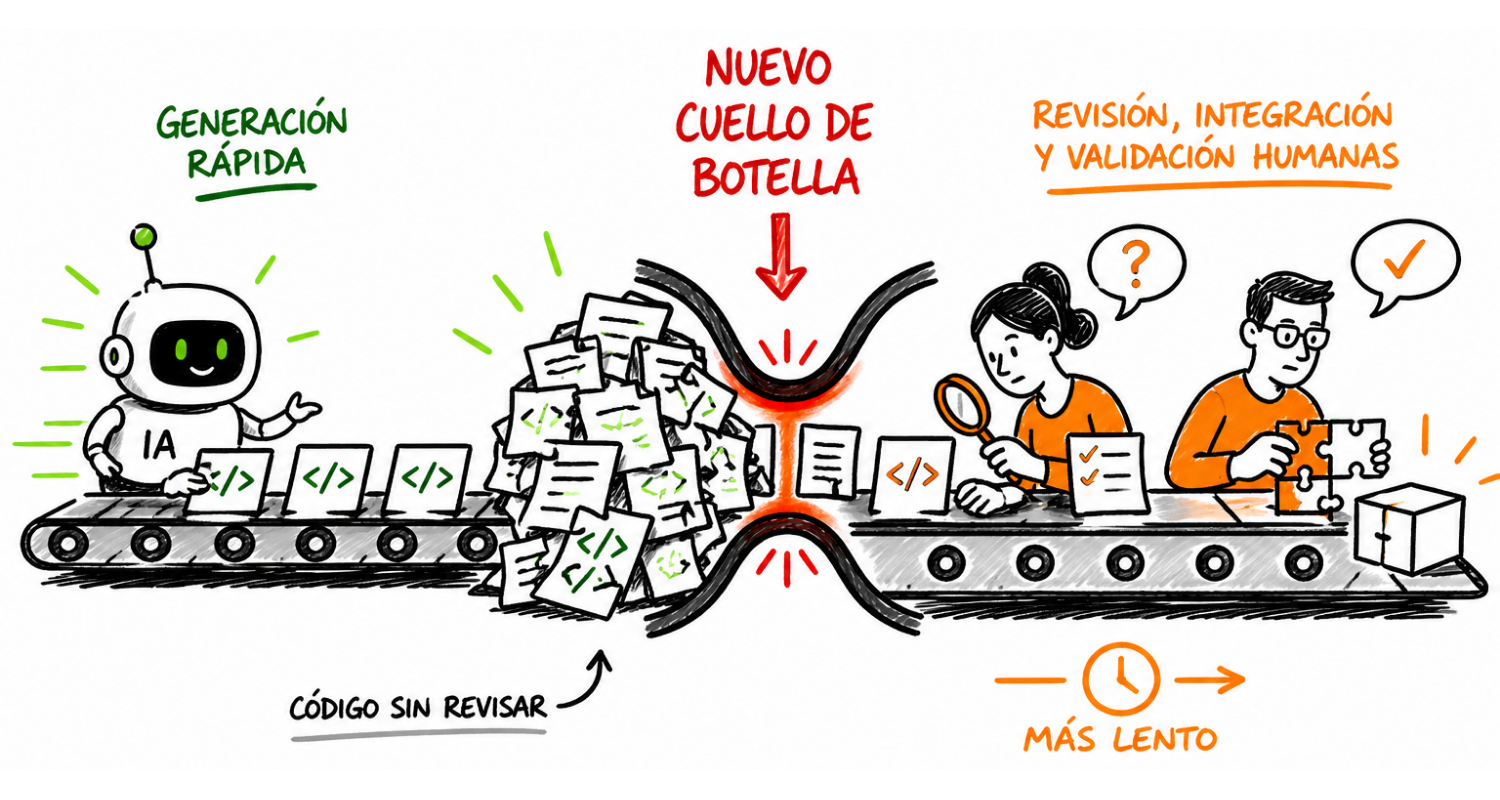
What Is Your Team's Real Bottleneck?
Until recently, when a Scrum Team got stuck, the most frequent answer was predictable: we need more development capacity. More people, more sprints, more hours. Implementation was slower. But something has changed. With generative AI accelerating code writing, test generation, and prototype creation, that constraint has shifted. And if we don't know where it has moved, we risk optimizing what no longer matters.
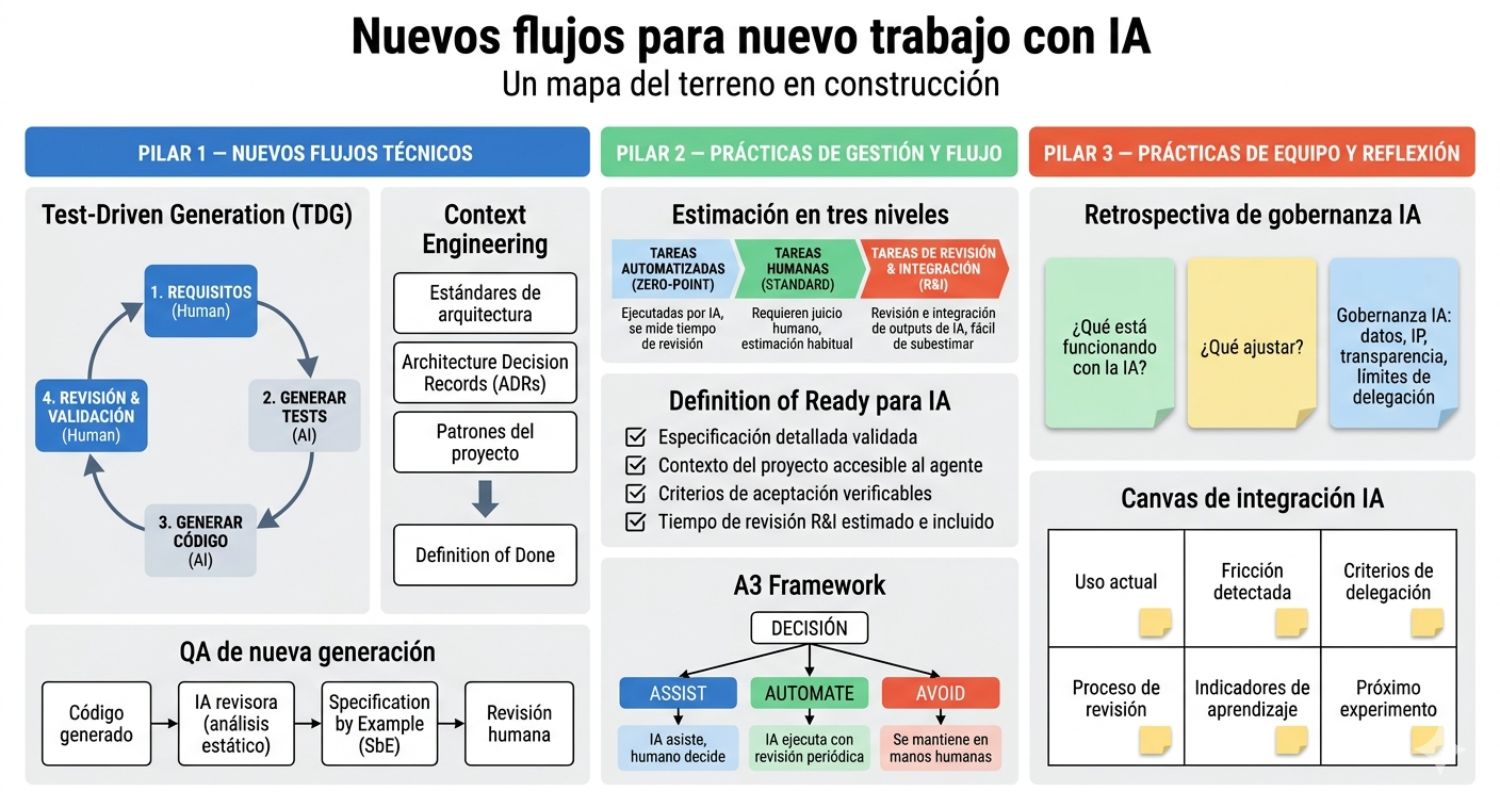
Nuevas prácticas para equipos ágiles con IA
En un artículo anterior nos preguntábamos qué hacer con las prácticas que ya tenemos. Este pregunta algo diferente: ¿qué prácticas nuevas pueden darse en un contexto de Scrum con IA? La respuesta es más concreta de lo que parece. No son teorías: son flujos de trabajo, criterios de decisión y herramientas de reflexión que equipos reales están poniendo a prueba ahora mismo, con diferente nivel de madurez. Ninguna es definitiva. Todas merecen ser conocidas.

Retrospectives that matter: when a retro is a ritual and when it is real improvement
Many people will recognize this scene: the team has been holding retrospectives every sprint for six months. The board of sticky notes is spotless. The facilitators rotate. The format is always different. Yet the same problems keep showing up, sprint after sprint, in different words but with the same root. When does a retrospective stop being a tool for improvement and become a well-executed liturgy that changes nothing?

And How Do I Build the Strategy for a Product That Already Exists?
The vast majority of product strategy literature starts from scratch: an unsolved problem, a market opportunity, an unserved user. But most teams live a different reality: they have spent months or years developing a product that already has users, technical debt, accumulated features, commitments to clients, and a history that weighs heavily. How is a strategy built in that context? This is perhaps one of the most honest and least answered questions in the product discipline.

Your Organization Doesn't Have a Productivity Problem
I've been observing the same pattern in very different organizations. Large and small companies. Different sectors. Different teams. But the symptom always looks the same. Teams working at full capacity. Packed calendars. Constant meetings. Reports piling up. And yet, the organization moves more slowly than it should. For years we assumed it was a productivity problem. I believe that, in many cases, it isn't. It's a decision problem. Because when an organization can't move forward through decisions, it compensates with activity. More meetings. More follow-up. More coordination. More reports. But no amount of activity can replace a decision that never arrives. Over time I've reached an uncomfortable conclusion: many organizations are trying to optimize work when their real bottleneck is their capacity to decide. I've written about this. About productivity theater. About decision architecture. About the invisible cost of decision waste. And about why artificial intelligence won't solve this problem if we don't first solve how we decide. 👇 The full article is below.
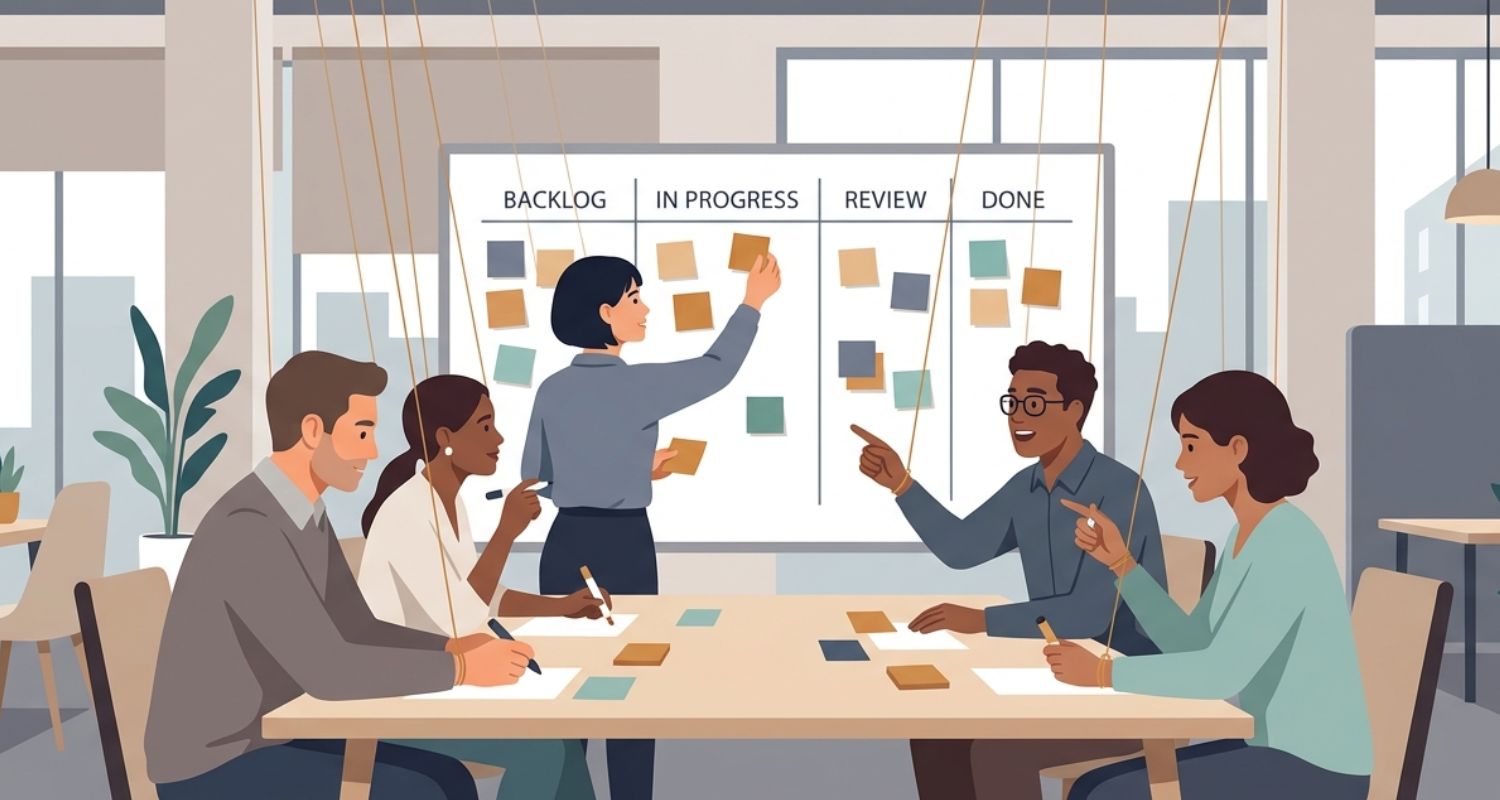
Real Self-Management vs. Declared Self-Management: How Many Decisions Does Your Team Actually Make?
In recent years, nearly every organization that has adopted agile frameworks boasts of having "self-managing teams." The phrase appears in corporate culture presentations, job postings, and onboarding sessions. But if we ask precisely, the answer usually reveals a notable gap between what is declared and what actually happens. This article does not aim to judge that gap, but to explore it honestly: what self-management really means, why it is so hard to sustain, and what questions are worth asking before concluding that it has already been achieved.