Generating code, prototypes, and documents costs a fraction of what it used to. The bottleneck shifts to product decisions, and that is the Product Owner's craft: the role the new situation revalues.
Product Owner
Product direction for the ground where the game is played today: teams working with AI. The most complete and up-to-date reference on the role.
Download the guide (PDF) Direct download, no sign-upFor decades, building products has been slow and expensive, and management revolved around execution. Recent evidence sketches a different scene.
of software teams already work with generative AI. The question is no longer whether the Product Owner will use AI, but with what judgment.
DORA, 2025longer is how much expert developers took when working with AI, while believing they had gone 20% faster. The feeling of productivity does not measure productivity.
METR, experimental study, 2025The vast majority of organizations report producing faster with AI; only a small fraction can identify a concrete return.
Industry surveys, 2026AI is an amplifier. It magnifies what already exists: teams with a healthy workflow turn the extra speed into results, and teams with problems watch them grow. Rather than fixing the system, the tool accelerates it.
When executing gets cheaper, deciding well what to build, and validating that what gets built solves a real problem, becomes the most valuable and scarcest activity. Producing has stopped being the bottleneck; deciding what to produce now is.
The role's movement fits in one sentence: the administrative layer of product work is exactly what AI does best, and judgment is exactly what it cannot replace.
The part of the role that is getting cheaper and no longer sets anyone apart.
The part of the role whose value AI multiplies by making everything else cheaper.
AI proposes; the person decides and is accountable. The Product Owner who only administered the backlog loses their place. The one who exercises the full role is the profile the new situation needs.
Assistance multiplies what already exists, mistakes included. These six are new, bear the AI stamp, and share a root: something that is not value has taken the driver's seat.
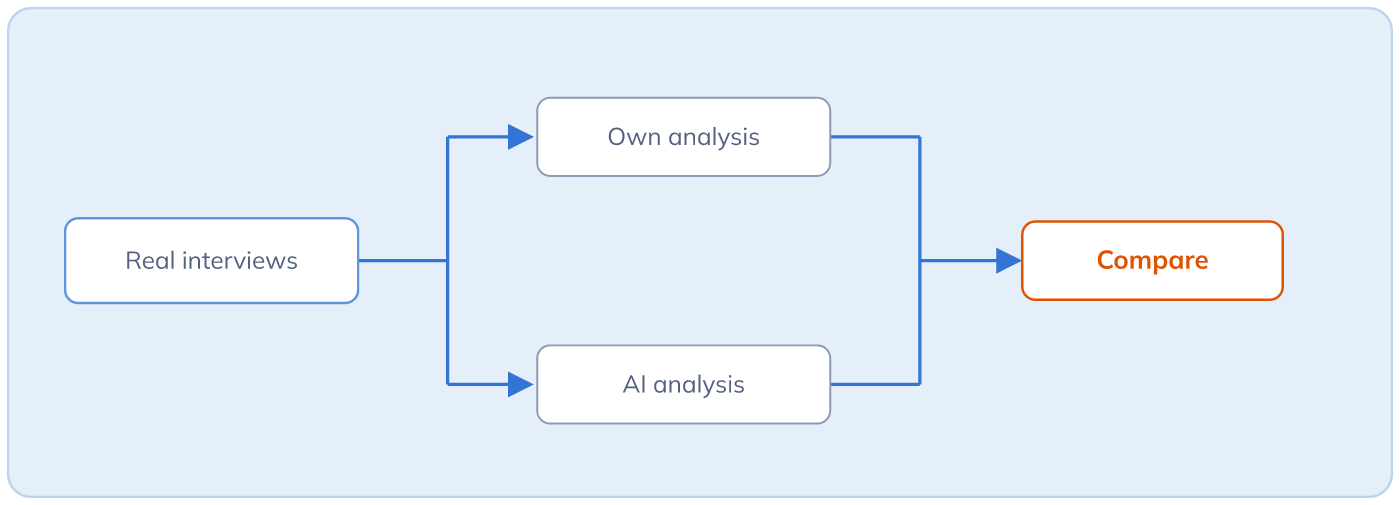
Dumping the transcripts and accepting the automatic summary without having gotten close to the material. Nuances are lost, the model's interpretations slip in, and the team stops knowing why it knows what it thinks it knows.
Antidote: compared synthesis. First your own analysis, then the AI's, and compare.
"Interviewing" simulated users and presenting the result as research. Comparative studies show them enthusiastically validating concepts that real users reject. Worse than having no evidence: having false evidence that looks real.
Antidote: AI accelerates the analysis of real evidence; it does not replace it. The synthetic is for rehearsing, never a source of findings.
Impeccable roadmaps, requirement documents, and reports with no evidence or decision behind them. AI does not distinguish the well-founded artifact from the empty one; it writes both equally well, in minutes.
Antidote: ask what decision each artifact changes.
Launching as a commitment what was an experiment. The brilliant demo AI produces in an afternoon becomes a Trojan horse: built to learn, sold as if it were built to earn.
Antidote: always tell building to learn apart from building to earn.
Celebrating the volume AI makes it possible to deliver while the cost of sustaining it grows with nobody prioritizing it. The product becomes slow to change just when it is produced fastest.
Antidote: the work nobody sees also goes into the backlog and is ordered by value.
"The model said so" as the justification for a decision. A Product Owner who hides behind the AI has given up exactly what their role exists for.
Antidote: AI does not sign. Accountability does not travel with the prompt; it stays with whoever decides.
Relays the requests of whoever really decides, with no authority of their own. The role becomes a messaging service and the product loses its direction.
Reduces the craft to writing and ordering the tickets others request. It is, besides, the profile automation leaves without a seat.
Dissolves accountability among several voices, and the decision ends up being made by the calendar of the busiest person.
"It's never been faster to build, which means it's never been easier to run 10 times faster in the wrong direction." Marty Cagan, 2026
This decade's tools will expire as the last decade's did. What remains is judgment: knowing what to ask, what to measure, when to decide, and what not to delegate. In the AI era it is, literally, the advantage, because everything else is getting cheaper.
Used well, AI is a personal multiplier for the Product Owner in four roles: analyst that synthesizes thousands of signals, critic that argues against and plays premortem, alternative generator from which judgment chooses, and secretary that gives hours back. The division is stable: what is repeatable and cheap to verify gets delegated; what decides, relates, or answers for things does not.
Everything generated is an unverified draft until someone with judgment checks it. Rigor is proportional to the cost of the error.
Whoever systematically delegates the analysis loses the judgment verification demands. On what matters, your own analysis comes first.
Whoever presents the analysis, makes the decision, or speaks to the stakeholders answers for all of it, with whatever assistance they used.
Product Owner, product manager, or product lead: the titles vary, the craft is the same. Here you will find the map of what AI changes in your work and the verification and confidentiality rules for working with it with judgment.
If you come to the role from development, analysis, design, or project management, the guide teaches you the whole craft, from discovery to delivery, and the resources on this page give you the path to train and get certified.
The profile that wrote tickets and maintained reports is no longer enough: AI automates that layer. What your organization needs is someone who chooses the problem, reads the evidence, and answers for value. This page helps you tell them apart.
It certifies the professional knowledge of product direction the guide develops. It is obtained at the official training centers of the Scrum Manager network, with in-person or online training and an official exam, and it joins your Scrum Manager professional profile alongside the rest of your certifications and skills.
Once certified, you keep your certification up to date in Skill Arena, and the Club Agile accompanies your professional development with Academy, the community, and Scrum Manager's resources.
Request training and certification at an official training center Network of official training centersScrum Manager maintains an ecosystem of resources for self-study, staying up to date, and continuous improvement.
The guide's complete syllabus in e-learning format, with check questions and mock exams similar to the official one. The most direct way to prepare for the Scrum Manager Product Owner core certification.
Product Owner in AcademyAligning team and stakeholders on what is going to be built and why before building it: vision, scope, risks, and shared assumptions from the start. A professional skill that complements the Product Owner.
Train in Skill ArenaUnderstanding people before deciding for them: empathize, define the problem, ideate, prototype, and test. The discipline of discovery that synthetic evidence cannot replace.
Train in Skill ArenaExpressing needs as conversations about value rather than closed specifications: the shape of backlog items, their acceptance criteria, and refinement with the team.
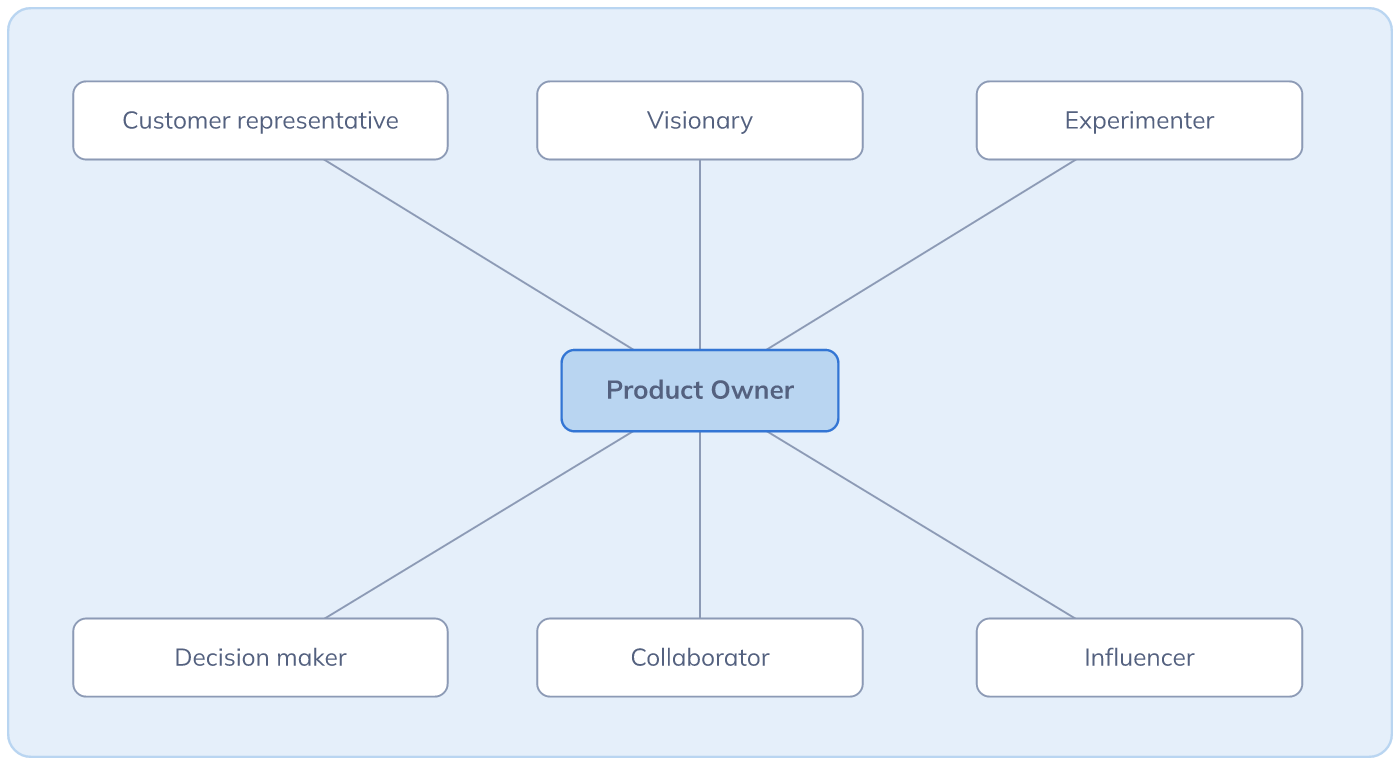
Train in Skill ArenaIn the job market, various titles coexist (Product Owner, product manager, product lead) whose distribution varies by organization. Scrum Manager does not distinguish among them: it teaches the full product role, with all its stances. The distinction that does matter is the one separating whoever directs a product's value from whoever merely administers its task list.
You need judgment to work with it. The guide distinguishes two dimensions: the Product Owner who works with AI as a professional tool (with its rules of verification and confidentiality) and the Product Owner accountable for a product that incorporates AI, which behaves probabilistically and demands new questions. Neither requires knowing how to program; both require knowing what not to delegate.
You can start today with the guide and with the Skill Arena skills, both open access, and continue with the syllabus in Academy. The Scrum Manager Product Owner core certification is obtained at the official training centers, which deliver the training and organize the official exam.
The ways of answering it will keep changing. The judgment to tell a good answer will always be the advantage. Start with the guide.