

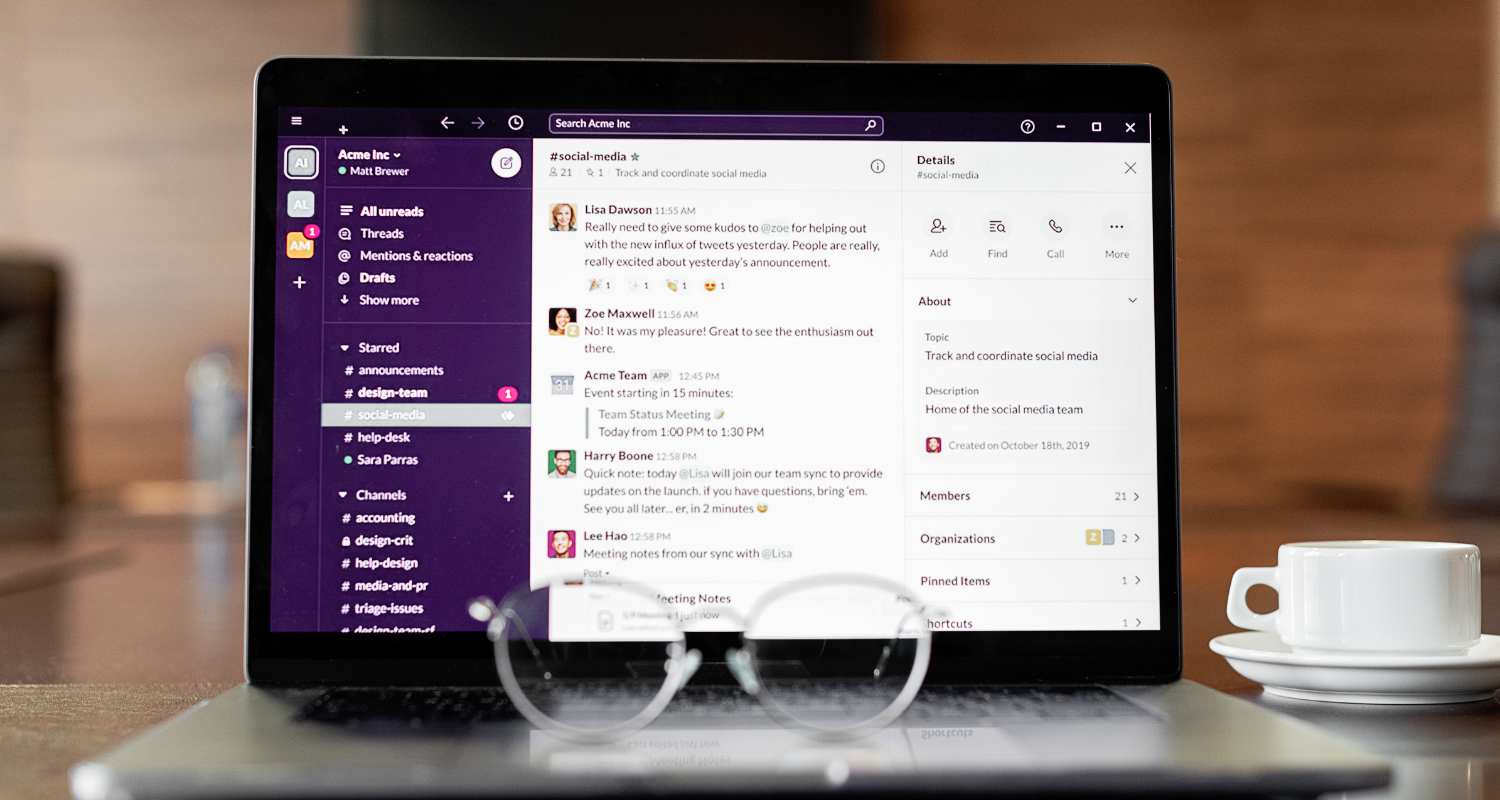
Your team has three developers in Barcelona, two in Buenos Aires, a PO in Manila, and a Scrum Master in Portland. A Daily Scrum at 9:00 AM means someone in Manila logs on at 4:00 PM (at the end of their workday), someone in Buenos Aires gets out of bed at 5:00 AM, and in Portland it's 12:00 AM (midnight).
After three months of rotating schedules "to be fair," nobody is happy. Burnout is evident in every video call. Then someone suggests: "What if we make the Daily Scrum asynchronous?" Doubts arise immediately: "Would it still be Scrum?"
Context Is What Matters
When Ken Schwaber and Jeff Sutherland formalized Scrum in 1995, and when they published the first Scrum Guide in 2010, the context of work was radically different:
- teams shared an office (or at least a time zone),
- remote work was exceptional and seen as "problematic,"
- video conferencing was expensive, of poor quality, and not very accessible,
- effective asynchronous collaboration was limited to email (slow and chaotic),
- and asynchronous teams were the exception that required justification to management.
At that time, designing synchronous time-boxed events made sense. If everyone is in the same room from 9 to 6, why not take advantage of that presence to inspect and adapt in real time?
But the world changed: the 2020 pandemic turned the exceptional into the norm. What was once a rarity became standard. And although many companies have returned (or tried to return) to in-person arrangements, the reality is that talent remains asynchronous, teams are hybrid, and time zones are a normal part of the equation.
There also existed (and still exist) teams that could be fully synchronous but choose not to be: senior developers who optimize for deep work; product owners who manage multiple products and need schedule flexibility; mature teams that find synchronous Dailies redundant because they already coordinate effectively through other means...
In short, the challenges are real, but the solutions don't have to be identical to those of 1995.
The Maturity Perspective
Not all teams need the same level of structure. For example, a junior team or one in training will likely need the explicit guidance of ceremonies by-the-book. Structures give them scaffolding to learn how empiricism works in practice. Skipping steps isn't liberating; it's confusing and counterproductive. However, a more mature team has already internalized empiricism. It understands why each ceremony exists. For them, following the guide to the letter can become constricting.
The critical question is not "Is it allowed to do asynchronous Scrum?" but rather "Does your team have the maturity to maintain transparency, inspection, and adaptation without the structure of synchronous ceremonies?"
What Scrum Really Says About Adaptation
The 2020 Scrum Guide is clear about its own nature: Scrum was never meant to be a step-by-step recipe. It is an empirical framework that, ironically, expects you to adapt it empirically. The guide defines the minimum components necessary to maintain empiricism, but deliberately leaves the "how" open.
The three non-negotiable pillars are:
- Transparency: can everyone see what is happening?
- Inspection: is progress and process examined regularly?
- Adaptation: are changes made based on what was inspected?
The Scrum Guide describes time-boxed events because that is ONE effective way to achieve these pillars. But it does not say it is the ONLY way.
What Asynchronous Scrum Is (and Isn't)
Let's first clarify what it is NOT:
- It is not eliminating ceremonies and working as freelancers coordinated through Jira.
- It is not a pretext for avoiding accountability or transparency.
- It is not an excuse for "doing Scrum halfway" because the ceremonies feel uncomfortable.
Asynchronous Scrum IS adapting the mechanics of Scrum events to preserve their purpose in contexts where constant synchronicity is impractical, unnecessary, or counterproductive for empiricism.
The critical distinction lies in maintaining the three pillars:
- If your asynchronous Daily means nobody knows what the others are doing until 12 hours later, you have lost transparency.
- If your asynchronous Retrospective means people add comments but nobody reads them and no conversation is generated, you have lost inspection.
- If you identify problems but nothing ever gets adapted because everything is text with no real discussion, you have lost adaptation.
On the other hand, if your asynchronous Daily keeps the team informed in a timely manner, generates conversations when they are needed, and allows the plan to be adjusted daily... then you are doing Scrum, even if it doesn't look like the textbook photo.
Contexts Where Async Makes Sense
Context 1: Unavoidable Geographic Distribution
Your best Scrum Master is in Zaragoza, your PO is in Mexico City, and three key developers are in the Philippines. There is no reasonable time window where everyone can be present without sacrificing mental health or sustainable pace. If you schedule the Daily at 9 AM Madrid time, it's 4 PM in Manila (manageable, but at the end of the day) and 2 AM in CDMX (inhumane). If you rotate, everyone suffers from shifts.
What works:
- Hybrid Sprint Planning: thorough asynchronous preparation (24-48h beforehand) + a short synchronous session on a rotating schedule every 3-4 sprints.
- Retrospective with asynchronous reflections + synchronous discussion of priorities.
- Review with recorded demos + a feedback and decision session.
Don't try to force synchronicity where it is impossible. But don't eliminate all human contact either. Find the balance.
Context 2: Mature Teams with High Autonomy
The members of your team have been working together for 3 years. They know the Definition of Done by heart. The backlog is always refined. Impediments are identified and resolved quickly on Slack before the Daily even starts. Yet the synchronous ceremonies feel like theater. The information shared in the Daily is already known to everyone. Planning feels routine because the stories have already been discussed. The Retrospective repeats the same topics without generating real change.
If time zones are not a problem, we can hold video calls to preserve the human side of working together. That said, there are mature teams that already maintain the "human side" through other means. They have informal connection rituals: they do voluntary pair programming, celebrate wins on Slack...
In this context, the following could work:
- an asynchronous Daily with one strict rule: any impediment requiring more than 2 people triggers an immediate call;
- asynchronous planning for routine stories; synchronous only for epics, direction changes, or high uncertainty;
- and Retrospectives can be held every 2 sprints instead of every sprint, with mini asynchronous check-ins in between.
Warning: maturity is fragile. If there is a change in members, product, or technology, you should reassess whether async is still appropriate.
Context 3: Work Optimized for Deep Work
Your team works on complex problems that require sustained, deep concentration: distributed systems architecture, machine learning algorithms, problems that need 3-4 hours of uninterrupted focus to make real progress.
Every interruption destroys productivity. If the Daily is at 10 AM, nobody starts deep work beforehand because "what's the point, if I have to stop in 45 minutes." Afterward, it takes about 20-30 minutes to return to a state of flow. You have effectively lost 90-120 minutes of productivity.
In this context, the following could work:
- an asynchronous Daily with a flexible window (e.g., between 8 AM and 12 PM local time),
- documentation that allows independent work,
- synchronous "office hours": 2-3 windows per week when the whole team is available for questions,
- and an emphasis on work in progress visualized in real time (Jira/Linear updated regularly).
Contexts Where Async May Not Work (and That's Fine)
Context 1: New or Developing Teams
Forming a team requires high-frequency, high-richness communication. You need to build trust, understand working styles, establish implicit norms, and create a shared language. That is not efficiently achieved through Slack.
Possible solution: the first 2-3 months can be synchronous, even if it hurts. Build the foundation. Then evaluate whether async makes sense.
Context 2: New Products or Technologies with High Uncertainty
When there is a lot of uncertainty, you need fast feedback cycles. Synchronous conversation allows real-time pivots. "What if we do Y instead of X?" → "Ah, yes, better" → decision in 2 minutes. In async, that conversation takes 8-24 hours.
Possible solution: maintain synchronicity during phases of high uncertainty (early product sprints, adoption of new technology, major architectural changes). Once knowledge stabilizes, consider async.
Context 3: Teams with a Weak Communication Culture
Asynchronous Scrum can increase the need for clear documentation and communication discipline. If your Definition of Done is ambiguous, if your user stories are vague, if decisions are not documented... async will be chaos (just as it would be in person, but perhaps with greater complexity).
Possible solution: before going async, invest 2-4 weeks in strengthening your communication and documentation.
Implementing in Phases
If you decide to experiment with async, we propose a path in several phases (you can modify it according to your metrics and your team):
Phase 0: Establish your baseline (week 0)
Before changing anything, measure your current situation:
- Cycle time: how long does a story take to go from "To Do" to "Done"?
- Participation: what percentage of ceremonies are regularly attended?
- Satisfaction: quick survey (1-10): how satisfied are you with the current ceremonies?
- Impediments: how many per week? What is the average time until resolution?
- Velocity: to compare stability later on.
Without these metrics, you won't know whether async is improving things, making them worse, or changing nothing.
Phase 1: Asynchronous Daily Scrum (4-week experiment)
For example:
Initial setup:
- Tool: Geekbot, DailyBot, Standuply, or a Slack channel with a clear structure.
- Time window: "between 8 AM and 12 PM your local time" (or adjust according to your distribution).
Structure:
- What did you complete since your last update?
- What will you work on today/in the next 24 hours?
- Impediments? If "yes" → tag whoever can help.
Protocol:
- Impediment affecting the Sprint Goal → immediate call.
- Impediment requiring more than 2 people → immediate call.
- Confusion about requirements with more than 3 back-and-forth messages → 15-minute call.
- Team conflict detected → Scrum Master facilitates a synchronous conversation.
Non-negotiable rules:
- 100% participation expected (if someone can't attend, give advance notice).
- Reading others' updates is mandatory, not optional.
- Respond to impediments in under 2 hours during working hours.
Signs of success (week 4):
- 90% or more consistent participation.
- Impediments are resolved in the same or less time than before.
- People comment on and proactively help each other.
- Nobody feels "disconnected" from the team.
Signs of failure (week 4):
- Less than 80% participation.
- Generic updates like "kept working on X."
- Nobody reads other people's updates.
- Impediments go unanswered for more than 4 hours.
- An increase in "extra meetings to sync up."
Phase 2: Hybrid Ceremonies (sprints 2-3)
Hybrid Sprint Planning:
- 48h before: the PO shares detailed stories in Confluence/Notion.
- 24-48h before: the team reviews them, asks questions in writing, proposes adjustments, and estimates.
- Planning day: 60-90 min synchronous ONLY for:
- Complex stories that need real-time debate.
- Collectively committing to the Sprint Goal.
- Validating that the adjusted estimates make sense.
- Identifying risks or dependencies that were not visible in writing.
Hybrid Sprint Review:
- 24h before: developers record demos (Loom, Slack clips, screen recordings).
- 24h before: stakeholders watch them and leave comments/questions in writing.
- Review day: 45-60 min synchronous to:
- Discuss complex or conflicting feedback.
- Make decisions about next steps.
- Adjust the Product Backlog live based on what was learned.
Hybrid Sprint Retrospective:
- 24-48h before: everyone adds reflections to a collaborative board (Miro, Retrium, EasyRetro).
- Pre-retro: the Scrum Master groups similar topics.
- Retro day: 60 min synchronous to:
- Vote on priorities together.
- Discuss the 2-3 most important improvements in depth.
- Commit to specific actions with owners.
Phase 3: Evaluate with Data (week 5)
Compare your current metrics against the Phase 0 baseline:
- If it has improved in 3 or more metrics: keep refining the async model.
- If it has worsened in 2 or more metrics: analyze what specifically is failing or consider returning to a synchronous approach.
- If everything remains the same: async gives you flexibility at no cost to effectiveness. That's a gain!
Measure every sprint. The effectiveness of async can change with new members, a change of product, or a change in the complexity of the work.
The Antipatterns That Destroy Asynchronous Scrum
Antipattern #1: "Async means no commitments"
Symptom
- People respond "when they can" (which sometimes means never), updates arrive sporadically, and nobody really knows what is happening day to day.
Why it kills async
- You lose transparency, and the team stops being a team, becoming individuals loosely coordinating.
Solution
- Non-negotiable time windows.
Antipattern #2: "Let's eliminate all meetings"
Symptom
- The team has no synchronous contact at all. They don't feel like a cohesive team.
Why it kills async
- It's easy to lose the human side and with it the sense of "team."
Solution
- At minimum, one synchronous touchpoint per week. It doesn't have to be ceremonial; it can be a voluntary pair programming session or a Retrospective every two sprints.
Antipattern #3: "Tools will magically solve it"
Symptom
- They adopt Geekbot thinking it will automatically create asynchronous discipline. Spoiler: it won't.
Why it kills async
- The tool facilitates things, but it doesn't create culture or discipline. That comes from the team.
Solution
- First establish habits and discipline manually. Once the habit exists, automate it with tools. Not the other way around.
Antipattern #4: "Async is forever"
Symptom
- They adopted async 6 months ago. Since then, 3 new members have joined, they changed products, and they have coordination problems. But "we're already async," so nobody questions it.
Why it kills async
- Context changes. What worked in March may not work in September.
Solution
- Review every 2-3 months in a Retrospective: does async still make sense for us? If the metrics have worsened or the context has changed, consider temporarily or permanently returning to synchronous work.
There are also other antipatterns, more focused on Scrum in general. You might take a look at the Antipatterns tool: it offers a library of antipatterns and a diagnostic tool for identifying them in your teams.
References
- AI-Agile.org (2025). "Scrum Guide Expansion Pack — Modern Guidance for Applying Scrum". Available at: https://www.ai-agile.org/2025/06/scrum-guide-expansion-pack-modern.html
- Agile Ambition (2024). "Don't Let Async Standup Kill Team Effectiveness". Available at: https://www.agileambition.com/asynchronous-daily-standup/
- Friday.app (2024). "Asynchronous Daily Standups (How They Work)". Available at: https://friday.app/p/asynchronous-daily-standups
- Full Scale
- (2025). "Sprint Planning 101: How to Successfully Work with Distributed Teams Across Time Zones". Available at: https://fullscale.io/blog/sprint-planning-tips/
- (2025). "Agile Sprint Planning for Distributed Teams: A Real-World Guide". Available at: https://fullscale.io/blog/agile-sprint-planning-for-distributed-teams/
- Geekbot (2025). "The Benefits of Asynchronous Daily Scrums". Available at: https://geekbot.com/blog/asynchronous-scrum/
- Hyperdrive Agile (2024). "How to Manage Distributed Scrum Teams". Available at: https://hyperdriveagile.com/articles/how-to-properly-manage-distributed-scrum-teams-71
- Parabol (2023). "The 5 Scrum Ceremonies Explained for Remote Teams". Available at: https://www.parabol.co/blog/scrum-ceremonies-for-remote-teams/
- Range (2022). "Asynchronous Daily Standups: The Pros & Cons". Available at: https://www.range.co/blog/asynchronous-daily-standups
- Schwaber, K. & Sutherland, J. (2020). The Scrum Guide. Available at: https://scrumguides.org/scrum-guide.html
- SensioLabs (2025). "Scrum Guide Expansion Pack (2025): Key Insights You Need to Know". Available at: https://sensiolabs.com/blog/2025/scrum-guide-expansion-pack-2025-key-insights-you-need-to-know
- Sutherland, J., Coleman, J. & Jocham, R. (2025). Scrum Guide Expansion Pack. Available at: https://scrumexpansion.org/
- Team O'clock (2024). "Remote Scrum Guide". Available at: https://www.teamoclock.com/remote-scrum-guide
- Team O'clock (2024). "Daily Scrum for remote teams". Available at: https://www.teamoclock.com/remote-scrum-guide/04-daily-scrum-for-remote-teams
Comments (1)
Log in to your Scrum Manager area to comment
Jorge Sánchez López ★★★
4 Feb 2026 16:39Good article: well argued, with historical context and a focus on the real problem (distributed work ≠ office Scrum).
The key nuance I would reinforce is this: async doesn't simplify Scrum, it makes it more demanding.
It requires more clarity, more discipline, and better explicit agreements. Without those, it's not empirical adaptation, it's dilution.
I'd also highlight more that maturity is not seniority. There are "expert" teams that, without synchronicity, lose transparency over hours, and less seasoned teams that work better because the system is well designed.
And one last critical point: async doesn't replace conversation, it redistributes it.
If everything becomes text, adaptation slows down and conflicts become entrenched. The hybrid approach (async to prepare, sync to decide) is the only sustainable one.
I fully agree:
the question is not whether it is "allowed," but whether the team can sustain transparency, inspection, and adaptation without the crutch of daily synchronicity.
Buen artículo: bien argumentado, con contexto histórico y foco en el problema real (trabajo distribuido ≠ Scrum de oficina).
El matiz clave que reforzaría es este: async no simplifica Scrum, lo hace más exigente.
Requiere más claridad, más disciplina y mejores acuerdos explícitos. Sin eso, no es adaptación empírica, es dilución.
También destacaría más que madurez no es seniority. Hay equipos “expertos” que sin sincronía pierden transparencia en horas, y equipos menos veteranos que funcionan mejor porque el sistema está bien diseñado.
Y último punto crítico: async no sustituye conversación, la redistribuye.
Si todo se convierte en texto, la adaptación se ralentiza y los conflictos se enquistan. El enfoque híbrido (async para preparar, sync para decidir) es el único sostenible.
Coincido plenamente:
la pregunta no es si “está permitido”, sino si el equipo puede sostener transparencia, inspección y adaptación sin la muleta de la sincronía diaria.
Automatic translation · View original