

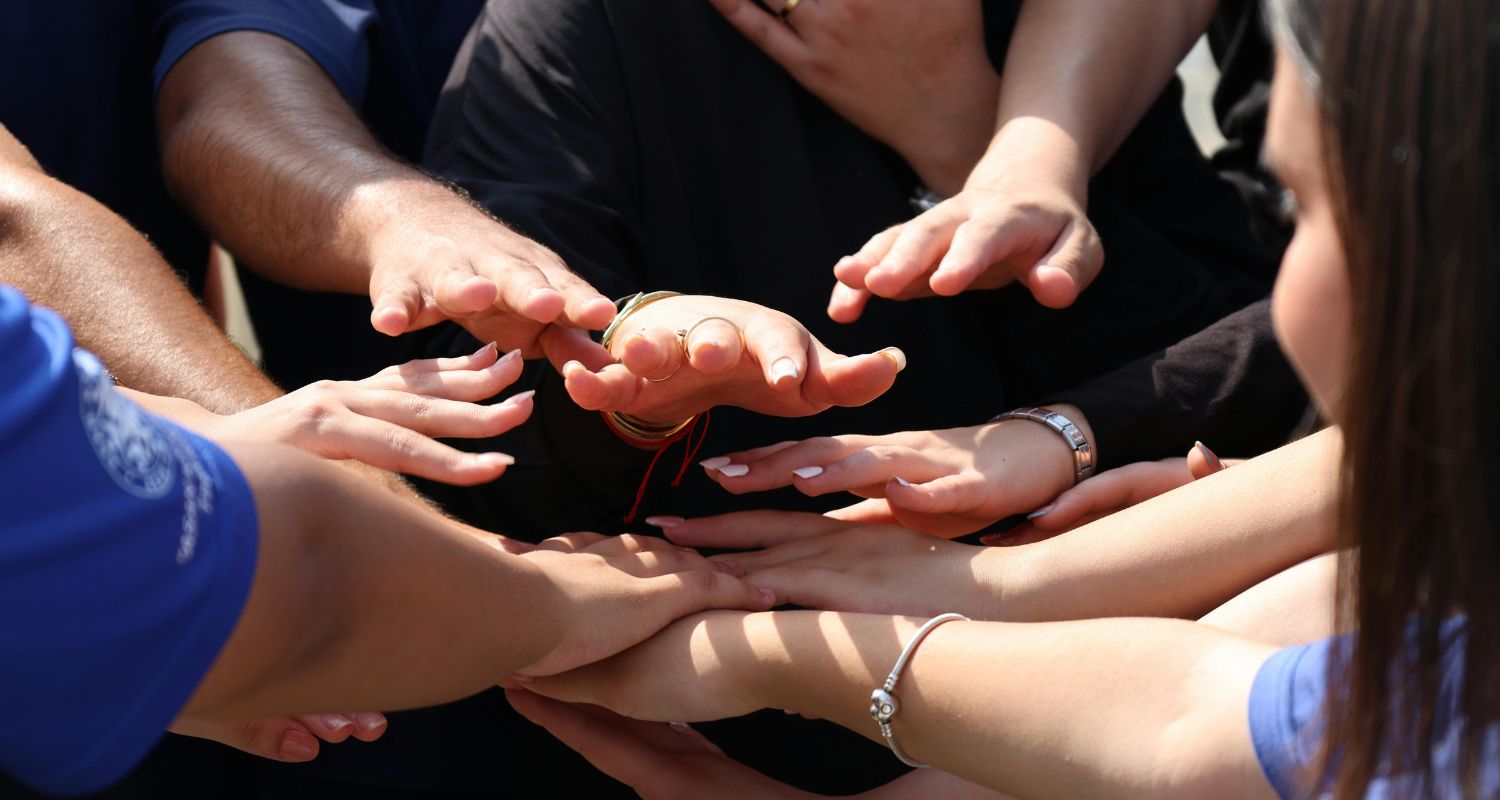
If you can't measure it, you can't manage it. Can this phrase apply to trust? Discover the four key steps proposed by John Blakey to turn trust into a rigorous and manageable metric.
Yesterday I came across this article "If trust is so important, why aren't we measuring it?" by John Blakey. In it, he not only claims that trust can be measured, but also shows how to turn it into a strategic KPI.
Trust is a basic pillar for a company's reputation and for team leadership. It cuts across all areas and can be what determines a team's success. It has always been considered a very subjective aspect, closer to soft skills. However, for Blakey it should be measured in organizations.
Blakey proposes four key steps to measure trust effectively:
-
Choose a measurement tool. There are tools that generate reliable trust metrics, for example, Blakey's own Leadership Trust Index (LTI), Paul Zak's Organizational Trust Index, or Stephen M.R. Covey's Speed of Trust. Which tool we choose will depend on the approach and the type of language suited to our target audience. For example, Covey's Speed of Trust has a more commercial language and is more focused on sales-driven cultures.
-
Monitor. Trust should be monitored: it is dynamic and changes with leadership actions, cultural shifts, external factors... This monitoring makes it possible to detect problems early and prevent them from taking root in the long term: cultural toxicity, reputational risk...
-
Manage actively. Measuring trust objectively is essential, according to Blakey, because there is a bias among leaders, who tend to rate themselves as more trustworthy than others report them to be. With an objective assessment it is easier to reconcile how leaders perceive their behavior with how others experience it.
-
Benchmark. Once the previous points are done, an organization should compare its levels of leadership trust with other companies in its sector. For example, over the last seven years, according to Blakey's studies, there are three strong behaviors that foster trust: delivering work on time and within budget, being honest, and motivating others; and three weak behaviors: showing appropriate levels of vulnerability, confusing humility with weakness, and relying on a top-down leadership style. If an organization consistently exceeds the benchmark (that is, its trust levels are higher than the average in its sector), it can use that trust as a unique competitive differentiator.
Now, measuring trust will only work if leaders have the courage to expose their blind spots. The goal is not to prove that you are perfect, but that you are managing risk through a rigorous and deliberate process.
So my question is: would organizations really have the courage to measure trust? Or is it too sensitive a metric?
References
- Blakey, John
- (2016), The trusted executive.
- (2018), The Trusted Executive CEO/Senior Leader Trustworthy Behaviours and Their Role in Promoting Organisational Trustworthiness, Aston University.
- (2024), "Measuring Trust Using The Leadership Trust Index", Dr John Blakey.
- (2024), "If trust is so important, why aren't we measuring it?", Harvard Business Review.
- Covey, Stephen M.R. (2024), La velocidad de la confianza.
- Zak, Paul
- (2016), Webinar "La neurociencia de la confianza", Harvard Business Review.
- (2017), "The neuroscience of trust", Harvard Business Review.
Comments (2)
Log in to your Scrum Manager area to comment
Guest
5 Nov 2025 14:07Hello, I would like more information about the Leadership Trust Index (LTI), the Organizational Trust Index by Paul Zak. Is there any serious bibliography or article on this subject?
Hola, me gustaría tener más información sobre el índice de confianza en el liderazgo (Leadership Trust Index, LTI), el Índice de Confianza Organizacional (Organizational Trust Index) de Paul Zak. Existe alguna bibliografía o artículo serio al respecto?
Automatic translation · View original
Marta Berné ★★
6 Nov 2025 10:09Hi! I've added a few interesting links to the post.
As for LTI, you should search for Blakey, the author of the article and creator of the tool. He has a book and a doctoral thesis on the topic of trust, but you'll find more information on his website (it's also in the post).
If I find more information, I'll add it!
¡Hola! He añadido unos cuantos enlaces interesantes al post.
Sobre el LTI tienes que buscar por Blakey, el autor del artículo y creador de la herramienta. Tiene un libro y una tesis doctoral sobre el tema de la confianza, pero en su página encontrarás más información (está también en el post).
¡Si encuentro más información, la añadiré!
Automatic translation · View original