
The best of the agile community
June 2026
Issue 04 · Specialized Periodical
"A selection of best practices and trends for agile leaders in the era of accelerated digital transformation."
Agile leadership in organizations that aren't agile: how to survive in no man's land
You know the principles. You know how to facilitate a retrospective, write user stories with good judgment, and create an environment of psychological safety. But when you get to work, you find weekly status meetings that decide nothing, roadmaps carved in stone six months in advance, and a hierarchy that approves even the color of the sticky notes. This is the reality of thousands of agile professionals who operate in organizations that aren't agile. It isn't a knowledge problem: it's an ecosystem problem. And it has more nuances than any Scrum manual can anticipate.

Canal De Escalado Y Liderazgo
1 May 2026
Featured Articles

Facilitating difficult meetings: when the problem is not the technique but the conversation
You know the facilitation dynamics. You have invested time learning to run retrospectives, planning sessions and alignment workshops. Even so, some meetings fall apart: uncomfortable silences, conversations that avoid the real problem, or moments when an unresolved tension explodes without warning. The question we rarely ask ourselves is whether the problem is the technique we chose or whether the conversation we need to have is simply one nobody wants to facilitate.
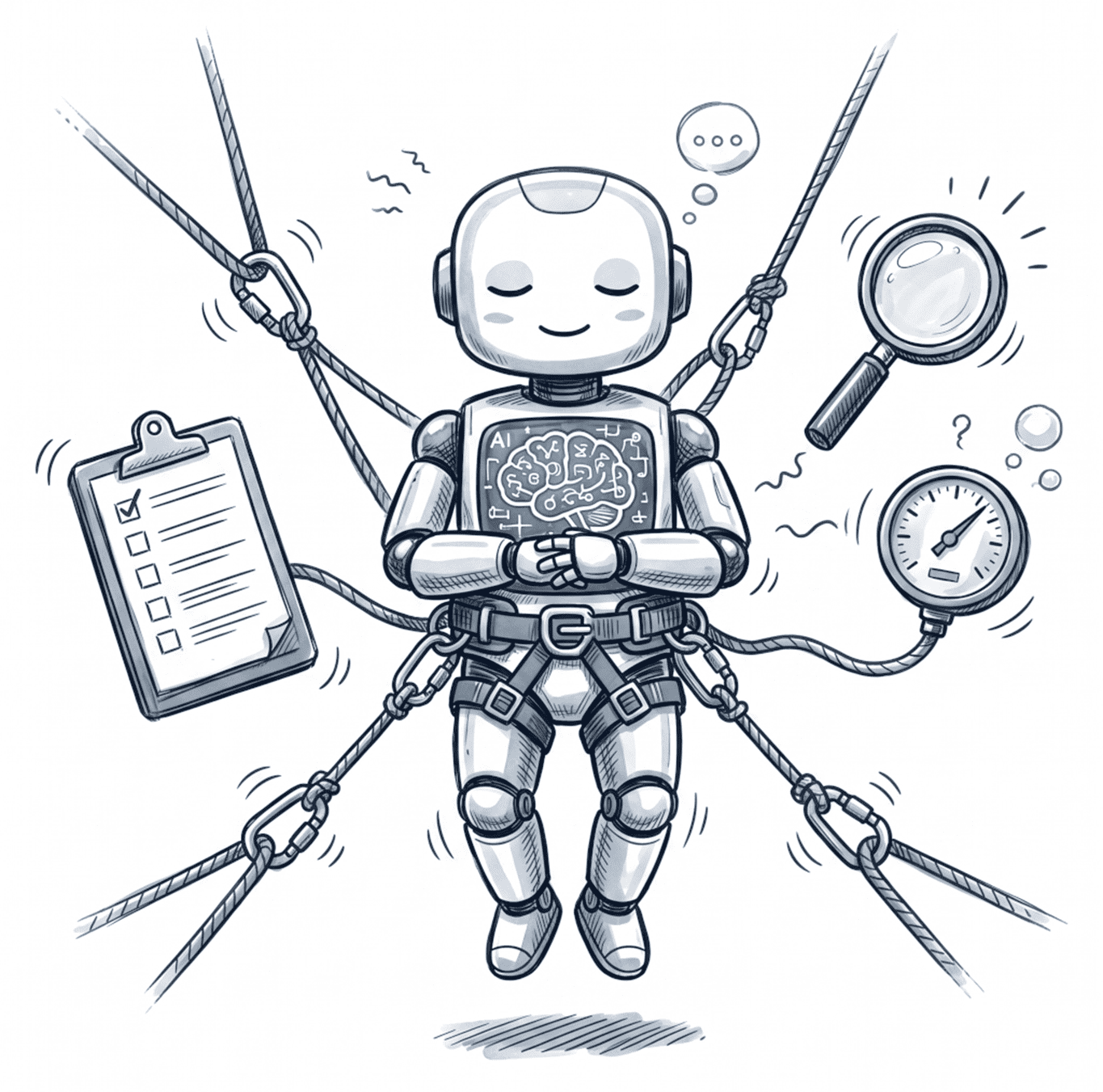
Harness engineering: why AI needs a harness, not just prompts
Many professionals have already lived the same scene: an AI agent delivers something that looks brilliant, but on calm review weak sources, unjustified decisions, skipped steps, or a confidence that doesn't match the evidence appear. The problem isn't always "the model." Often it's the environment we gave it to work in. Harness engineering proposes an uncomfortable but useful idea: if we want more reliable agents, we need to design better harnesses, not just write better instructions. This article is part of a content series that Scrum Manager is developing on Harness Engineering. If you want to move from reading to practice, a new topic is already available in **Skill Arena** dedicated to training this discipline. And, if you are a member of the Agile Club, you can go deeper with **two specialized state of the art resources: one for knowledge workers and another for developers.**

User Story Mapping in Practice: Where It Fails and How to Recover It
User story mapping has been one of the most recommended techniques for visualizing the user journey and structuring the product backlog for almost two decades. However, those who have facilitated it more than once know that an uncomfortable gap often opens between the promise of the method and its real application. Not always due to lack of knowledge, but because the map often becomes a nice-looking artifact that ends up forgotten. What is really failing, and does it have a solution?

Why do so many Agile transformations fail?
Why do so many Agile transformations fail? It's not Agile. It's how you're understanding it.

What Artists Can Teach Us About Solving Problems in Agile
Three lateral thinking techniques for solving problems in agile. Stop seeing what you expect and discover what is really happening.

From Product Owner to Product Architect: How AI Redefines the Role
The Product Owner was the voice of the customer on the team. Their job was to manage a backlog, prioritize user stories, and make decisions about what to build. For years, that was enough. Today, when a team can generate in hours what used to take weeks, that description of the role has become too small. AI has not eliminated the need for someone to decide what deserves to be built. On the contrary: it has made that need more urgent and more demanding than ever. There is an irony in what is happening to the product role in the age of AI. For years, the community debated whether the Product Owner had too much power or too little, and whether they should be more technical or more strategic. Then generative AI arrived, and that debate was overshadowed by a more concrete one: the role is not at risk of disappearing, but of becoming the point where everything is won or lost.