
The best of the agile community
April 2026
Issue 02 · Specialized Periodical
"A selection of best practices and trends for agile leaders in the era of accelerated digital transformation."
Scrum in the Age of AI
This document grew out of a simple question: what changes in Scrum when AI is part of a team's workflow? It is not a manifesto or a definitive guide. It is an analysis in progress about which practices need review, which principles are being reinforced, and which working models are emerging in the professional community. It is backed by real data and built on the experience of teams that are already navigating this change. We are publishing it here, in the Community, because we believe a document about agility in evolution should itself evolve. This document is only the starting point: we want to iterate on it to create something more complete. That is why, if something does not fit your experience, if something is missing, or if something is poorly focused, we want to know. Read, comment, disagree. Every contribution, criticism, or suggestion is welcome.

Tablón De Anuncios
1 March 2026
Featured Articles

Agility Is Dead: Long Live Synthetic Curation
For years, we have hidden behind Sprints to justify our existence. We have turned agility into a bureaucracy of sticky notes and daily meetings that only serve to coordinate a slowness that no longer exists. Today, Artificial Intelligence has blown the board apart. If your team keeps celebrating that they closed 40 tickets this week, you are celebrating a defeat. AI can close 400 in an afternoon. The question is not how much you do, but why you keep doing the same thing. If your agile process can be summed up in a flowchart, an AI has already replaced you. But if your process requires judgement, intuition, and disobedience, then, and only then, you are still necessary.
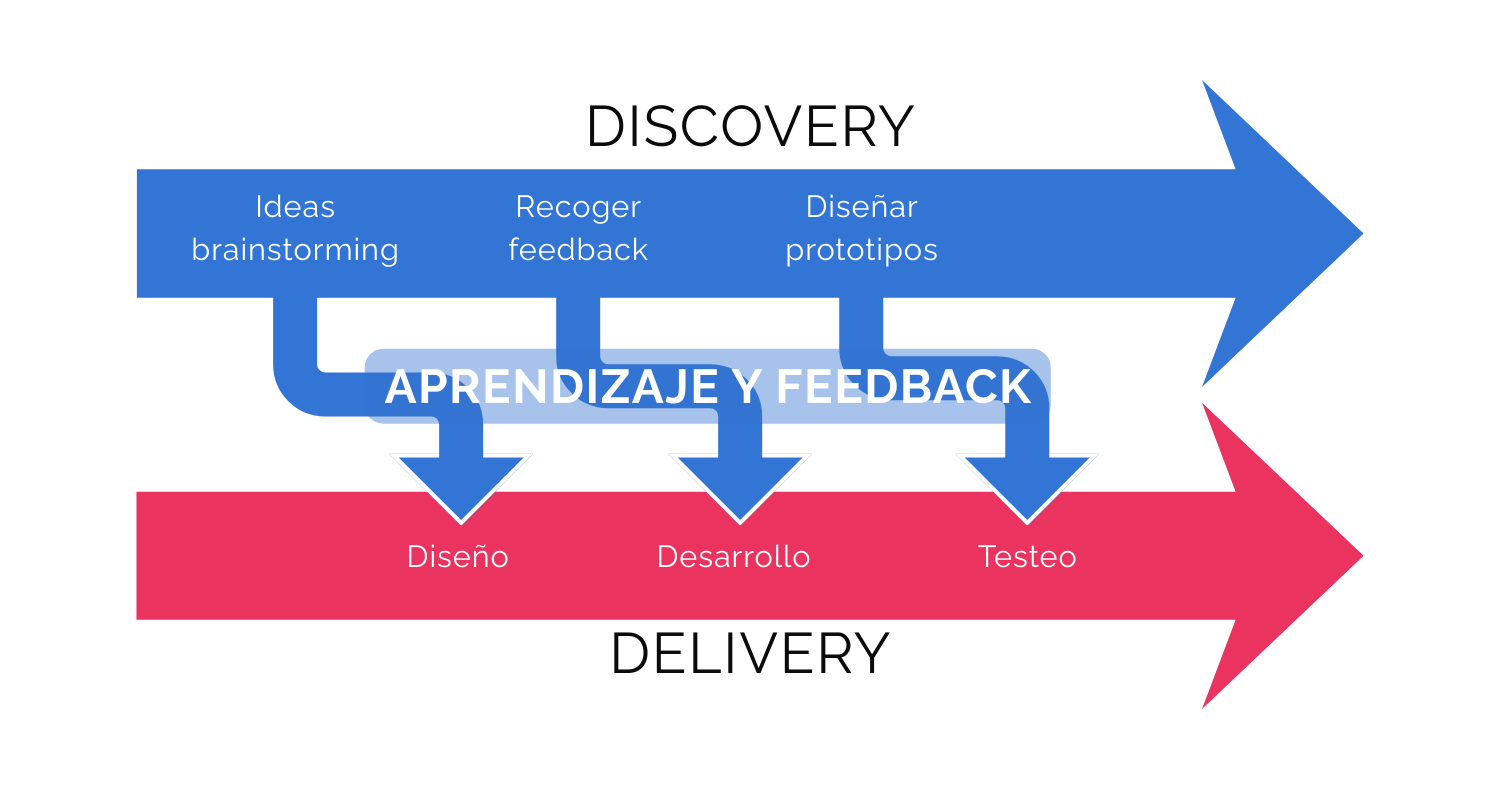
Dual Track in Practice: Discovery + Delivery Without Bureaucracy
"We do discovery, but then we're asked to deliver what was already decided." "We have a discovery backlog that never empties." "Discovery has become yet another phase, with its own deliverables and meetings." If any of these sentences sounds familiar, you're probably experiencing what happens when Dual Track becomes the very thing it was meant to avoid: more process, more documentation, more bureaucracy. The promise was to learn faster and reduce waste. The reality, in many organizations, is that we have added one more layer of activities to justify and manage. Where is the balance between rigor and pragmatism?

What You Need to Know About Your First 90 Days as a Scrum Master
Find out what happens in your first 90 days as a Scrum Master, the most common mistakes, practical advice, and the role in the age of AI.
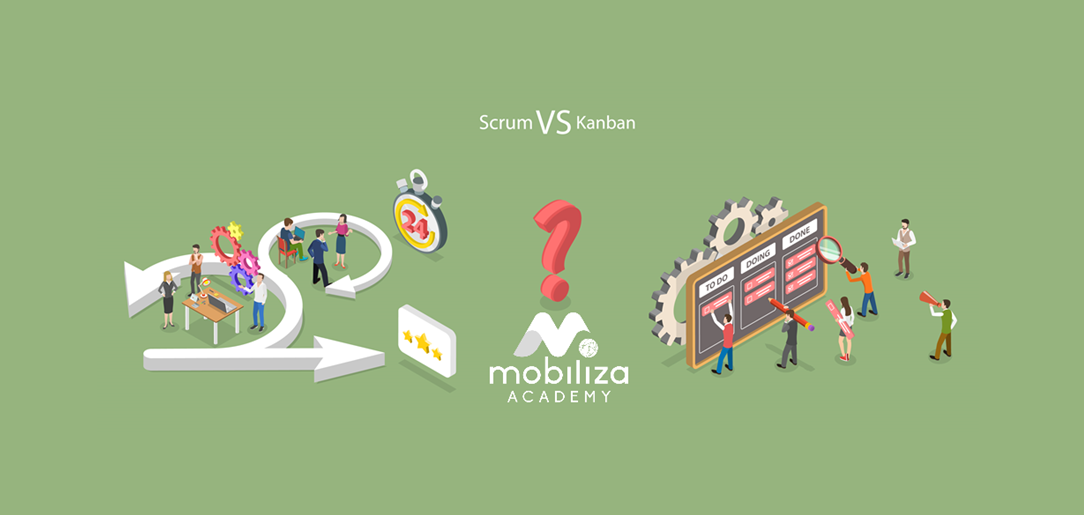
Scrum vs Kanban is not a framework problem
**Many organizations are investing in AI, automation, and efficiency.** But few are asking themselves a prior question: - Do we clearly understand how our work system operates? Because if you don't, - you're not optimizing. - you're scaling mistakes. Before applying AI, automating, or scaling… - there is a prior decision that almost no one questions: - how you are actually working. And that's where many problems begin.

Scrum in Email Marketing: The Art of Refining the Automation Backlog
In the world of Email Marketing, a Lead Nurturing flow is not just "**sending emails**". It is a piece of behavioral engineering. If you try to cram an entire complex flow into a single User Story, you are buying a one-way ticket to Sprint failure. As Scrum Masters, our challenge is to help the Product Owner "**slice**" this elephant without losing its strategic meaning. Now, here I bring you experience for refining stories and keeping the **launch of a Lead Nurturing** from turning into 'The Hunger Games: Special Edition for Email Marketing Specialists'

Can an organization be agile if its funding model is from the last century?
There is a conversation that almost no agile transformation dares to have. It is not about the framework chosen, nor about whether the teams do the daily well, nor about whether the product owner has enough authority. It is a conversation about money. About how it is decided what gets funded, when, and on what criteria. About whether the organization's financial model—built in many cases decades ago and barely questioned since—is compatible with the way we want to work. This question is uncomfortable because it touches power structures that go far beyond agile teams. But ignoring it has a cost that, sooner or later, becomes visible.

Retrospectives that matter: 10 formats that bring continuous improvement back to life
You arrive at the Sprint Retrospective and feel it in the air: glances at the clock, arms crossed, that collective sigh barely disguised. "What went well? What could we improve?" The same questions. The same vague answers. The same commitments nobody will keep. When it ends, everyone leaves with the feeling of having lost an hour that could have been invested in "real work". If this sounds familiar, your team is not alone. Many report that retrospectives have lost effectiveness over time. Why?